clermontACTIVITIESMy day 0
☰
← Back to Clermont

HERITAGE GOLD / THEN & NOW

Clermont’s history.
In 4 minutes, 10 seconds.

Citrus groves, working hands, and a waterfront that kept changing. Follow Clermont’s story through actual photographs and local memory.

Explore this chapter ↓
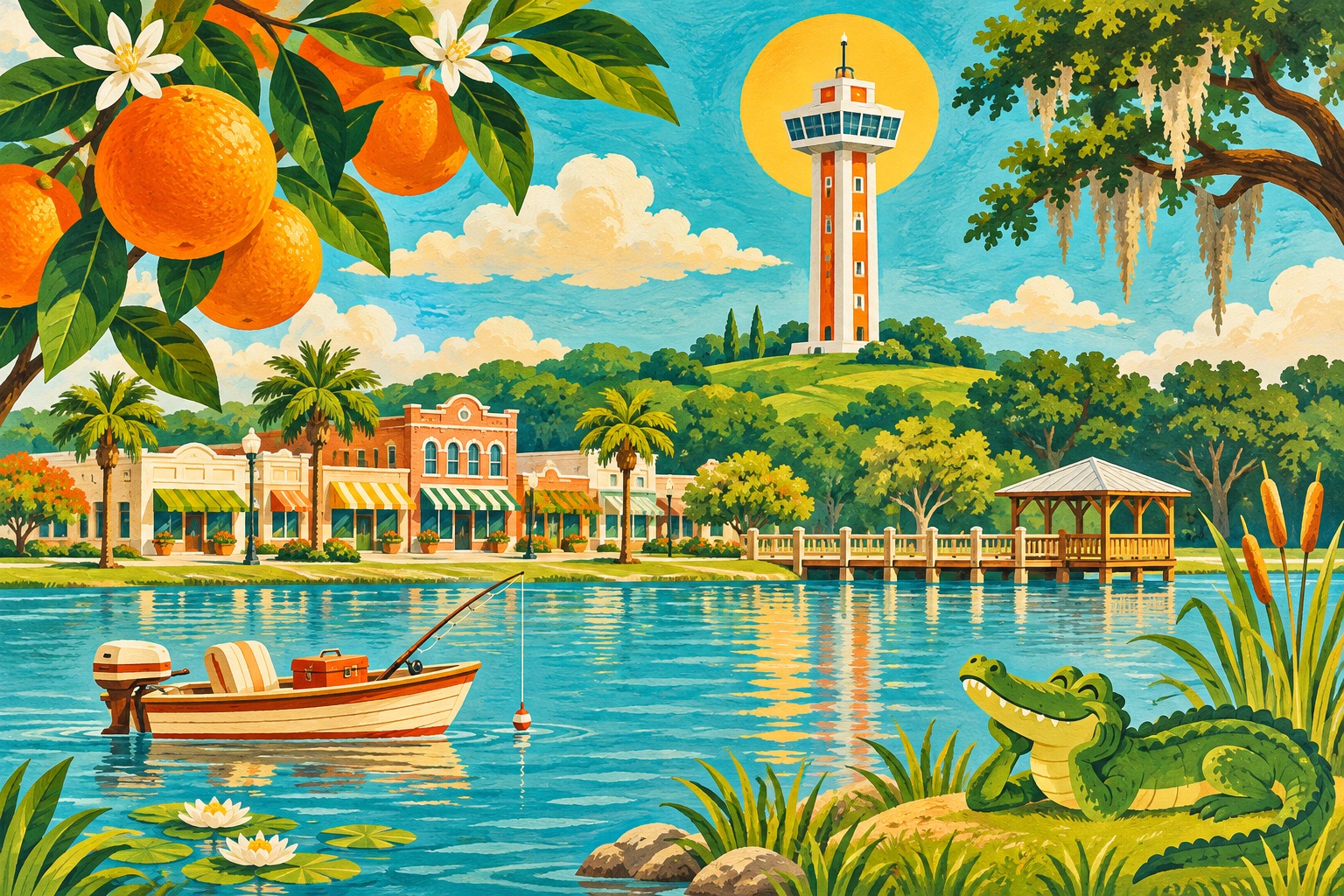
Illustrated Clermont-inspired scene

02 / THE PEOPLE BEHIND THE PLACE

Over a century of history.
In under 5 minutes.

From citrus town to a growing lakefront community.
Clermont’s changing landscape, decade by decade.

LISTEN TO THE JOURNEY

Learn about Clermont’s history.

Sponsored by DW&Co. Real Estate

Read the transcript4 min 10 sec
Music credits

Music: “River Valley Breakdown” by Kevin MacLeod and “Nice And Easy” by Jason Shaw / Audionautix, licensed under Creative Commons Attribution 4.0. Music excerpts have been faded, crossfaded, and mixed beneath the narration.

CLERMONT HISTORY POP QUIZ

What’s your resident ranking?

Listen to the 4:10 history recording, then answer 10 questions from it. Get 9 or 10 right to earn Clermont Homesteader.

See the resident rankings
  • 0–2 correct Recent Northern Transplant
  • 3–4 correct Weekend Regular
  • 5–6 correct Neighborhood Regular
  • 7–8 correct Clermont Insider
  • 9–10 correct Clermont Homesteader
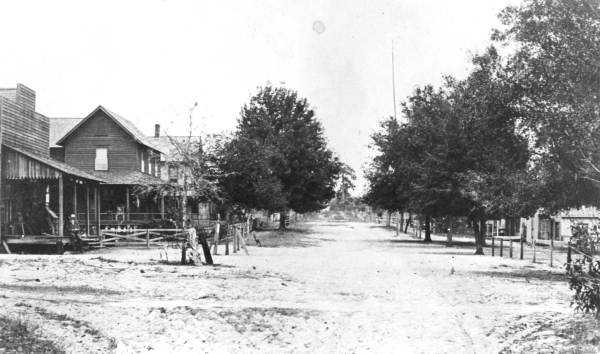
Early Clermont street scene, circa 1900FROM THE STATE ARCHIVES OF FLORIDAc. 1900

A TOWN TAKES SHAPE

Clermont, at street level.

View the archive record ↗

Archival photographs, shown at their recorded dates.

Photographs are historical records; their dates are separate from the city’s 1884 founding. “Circa” means approximate. Archive images are presented without colorization or generative reconstruction.

1884–1916 / A CONNECTED TOWN

Lakes, groves, and the railroad.

Clermont was founded in 1884 and incorporated in 1916. Between those milestones, transportation changed what a small town could do. The Orange Belt Railway extended through Clermont in 1887, linking it with surrounding communities and markets farther away. Growers could move fruit; the town’s shops and services could grow around that work.

The depot preserved at Historic Village dates to about 1925 and replaced earlier buildings nearby. Today it houses the Historical Society’s office—a useful place to begin exploring the connection between the rail line, the lakefront, and the town that developed around them.

Clermont Historical Society: the depot ↗City founding and incorporation ↗

1887 ONWARD / PEOPLE WHO BUILT COMMUNITY

James and Sallie Townsend.

The Historical Society identifies James and Sallie Townsend, who arrived from Georgia in 1887, as Clermont’s first Black residents. They operated a small store, helped establish the first school for Black children in the town, and founded St. Mark A.M.E. Church.

Sallie trained in midwifery and nursing and cared for both Black and white families. In 1941, she opened a maternity home for Black women. Their home, built around 1895, was relocated to Historic Village in 2002 and opened to visitors in 2005. Their legacy makes the city’s history about education, care, faith, and everyday service as well as development.

Clermont Historical Society: Townsend House ↗

THE CITRUS YEARS / WORK BEHIND THE LANDSCAPE

More than rows of orange trees.

Citrus supported a network of growers, pickers, packing houses, transport workers, and local businesses. The photographs in this collection let us look more closely: a packing-house staff, a street of shops, and groves stretching across the hills. They show a place organized around work as well as scenery.

The Citrus Tower opened on July 14, 1956. At 226 feet tall, it offered visitors a sweeping view of the region’s citrus landscape. Its familiar orange-and-white profile remains part of Clermont’s identity, even as the land around it has changed.

Orange County Regional History Center: Citrus Tower ↗

1970–2024 / THE YEARS THAT RESHAPED CLERMONT

From groves to a growing city.

The change took decades. Follow the freezes, new sporting traditions, preservation projects, and public investment that helped shape the Clermont we know today.

1970s

A town between eras.

Montrose Street and the Citrus Tower still anchored Clermont’s identity. The 1970 and 1975 photographs preserve the streets and landscape before the severe freezes and rapid development of later decades. Roads, shops, groves, and tourist attractions shared the same small-city setting.

State Archives: Clermont from the air, 1975 ↗
1983–1989

Hard winters. A new sporting tradition.

The freezes of 1983, 1985, and 1989 repeatedly damaged Lake County’s citrus industry. Replanting carried the risk of another loss; the effects reached packing houses, jobs, and local commerce. The 1985 freeze photograph in the collection documents that regional damage.

Another use for the hills and lakes was taking hold. Fred Sommer brought the Great Clermont Triathlon to town in 1984, followed by more races in 1985. Endurance sport became a lasting part of the community.

Citrus Tower: the freezes ↗Sommer Sports: the first Clermont races ↗
1997–1998

A renewed commitment to downtown.

Clermont created its Downtown Community Redevelopment Agency on May 27, 1997. A redevelopment plan followed in August 1998. This established a continuing framework for investment in the older business district while the wider city grew.

Later streetscape projects improved sidewalks, lighting, landscaping, and utilities. The city’s 2012 report records the first phase completed in 2003 and most of the second phase completed in 2012.

City: establishment of the CRA ↗Redevelopment plan history ↗2012 CRA report: streetscape progress ↗
2001–2008

Training for the future. Preserving the past.

The National Training Center opened in 2001 on the South Lake Hospital campus, with fitness and aquatic facilities, athletic fields, and a human-performance lab. A track and cross-country course followed in 2002; Legends Way Ballfields opened in 2008.

At the waterfront, preservation gave older Clermont a lasting home. The Townsend House moved to Historic Village in 2002 and opened to visitors in 2005. Growth and the care of historic buildings became parallel parts of the city’s story.

National Training Center: its history ↗Historical Society: preserving Townsend House ↗
2014–2019

A plan for the waterfront.

Clermont adopted the Choice of Champions identity in 2014 and its Downtown-Waterfront Master Plan in 2015. Victory Pointe, completed in 2018, brought park space and stormwater treatment together near Historic Village. The new Kehlor Recreation Center opened in 2019.

City: downtown and waterfront milestones ↗
2020–2024

More ways to meet the city.

The new boat ramp opened and the Art Walk was completed in 2020; a streetscape phase followed in 2021. The 2020 Census counted 43,021 city residents, compared with 28,742 in 2010 and 9,333 in 2000.

The recent photographs show the results at street level: downtown storefronts, places to walk and gather, and the Citrus Tower in its changed surroundings. The photographs end in 2024; this guide was updated in November 2026.

City project timeline ↗U.S. Census Bureau: Clermont ↗
Population sources, image credits & reuse

9,333Residents in 2000

28,742Residents in 2010

43,021Residents in the 2020 Census

These figures describe Clermont city boundaries, not all Clermont mailing addresses. Sources: city statistics and U.S. Census Bureau.

Historical images: State Archives of Florida, Florida Memory. Additional photographs are credited individually to their photographers via Wikimedia Commons. Dates, creator credits, and license links appear below. Florida Memory identifies the selected archive images under the Creative Commons Public Domain Mark 1.0. Original archive records remain linked for further research.

A LOCAL REMEMBRANCE / FIFTH STREET

Bob’s 5th Street Grocer

Bob (Robert) Russell’s grocery store and butcher shop helped fuel Clermont’s working days: early sandwiches and drinks for orange pickers, lunch specials and custom cuts for farmers. He later closed the store to join Walt Disney World, where his family remembers 35 years of service before retirement with his children and grandchildren.

His grandson Brantley Wheeler carries a connection to that older Clermont through his local real estate brokerage and title company, and through volunteering at a church on Fifth Street near the former store.

A family recollection shared by Brantley Wheeler.

Read the complete narration

Look out across Clermont, and you can still read the land: hills, lakes, and a town that has kept finding new ways to make a living.

Founded in eighteen eighty-four and incorporated in nineteen sixteen, Clermont grew with citrus. The railroad arrived in eighteen eighty-seven, helping growers move fruit to markets beyond the lakes. Picking, packing, shipping, and local shops were all part of the same working community.

James and Sallie Townsend arrived in eighteen eighty-seven. The Historical Society remembers them as Clermont's first Black residents. They helped establish a school and Saint Mark African Methodist Episcopal Church. Sallie's work as a midwife and nurse served families across the community. Their home is preserved at Historic Village today.

The Citrus Tower opened in nineteen fifty-six. From two hundred twenty-six feet up, visitors looked across an agricultural landscape. Photographs of downtown and the tower in the nineteen seventies capture a town approaching a period of enormous change.

The freezes of nineteen eighty-three, eighty-five, and eighty-nine damaged Lake County's citrus industry. Some growers replanted, only to face another devastating winter. The losses affected jobs, packing houses, and businesses as well as the trees. Over time, residential development and the wider Orlando economy changed the use of land around Clermont.

At the same time, the hills and lakes were drawing a different kind of visitor. Fred Sommer brought the Great Clermont Triathlon to town in nineteen eighty-four. Swimming, cycling, and running made the landscape part of the event. More races followed, helping establish the area's endurance-sports community.

Downtown's next chapter needed investment, too. In nineteen ninety-seven, the city created its Community Redevelopment Agency. The first redevelopment plan followed in nineteen ninety-eight. Streetscape work and business improvements became part of a continuing effort to keep the older downtown active as Clermont expanded.

The National Training Center opened in two thousand one, bringing fitness facilities, an aquatic center, athletic fields, and sports-science services to the South Lake Hospital campus. A track and cross-country course followed in two thousand two.

Growth brought a reason to preserve the past. The Townsend House moved to Historic Village in two thousand two and opened to visitors in two thousand five. Downtown streetscape improvements were completed in two thousand three, with another major phase largely finished in twenty twelve.

Clermont's population grew from about ninety-three hundred in two thousand to more than twenty-eight thousand in twenty ten, then forty-three thousand in the twenty-twenty Census. Those figures describe the city itself, not every address carrying a Clermont mailing label.

In twenty fourteen, Clermont adopted the Choice of Champions identity. A Downtown-Waterfront Master Plan followed in twenty fifteen. Victory Pointe opened in twenty eighteen, combining a public park with wetlands that help treat stormwater. The new Kehlor Recreation Center followed in twenty nineteen. In twenty twenty, the city opened its new boat ramp and completed the Art Walk. Streetscape improvements continued in twenty twenty-one.

By twenty twenty-four, photographs show a familiar tower in a changed setting, and a downtown shaped by decades of reinvestment. The story between the groves and today's neighborhoods is also a story of recreation, preservation, and public spaces.

One small family connection belongs to Bob Russell's Fifth Street Grocer, remembered for feeding citrus workers and local farmers. His grandson, Brantley Wheeler, continues that connection to Clermont through his local businesses and service on Fifth Street.

As of November twenty twenty-six, this town is still writing its next chapter. Take a walk by the lake, visit Historic Village, and look a little closer at the streets around you. There is a lot of Clermont behind the view.

City history is based on the sources above. The Fifth Street remembrance was contributed by Brantley Wheeler. Sponsored by DW&Co. Real Estate.